Sealcoating your business’s parking lot pavement will renew the look of your asphalt with a fresh black coating. More importantly, sealcoating your asphalt will protect it by improving its resistance to environmental factors like water damage, UV rays, oxidation, fuel and chemical spills, and general traffic wear.
Contact Us for Sealcoating Materials
There is a range of materials that contractors use when they sealcoat. Each material has “pros and cons” when it comes to longevity, final appearance, the material’s components, and application methods. Every sealcoating project is unique, so it’s best that you have all the facts necessary to make an informed decision based on the advantages and limitations of each sealcoat material.
Keep in mind that every contractor will try to “sell you” on the specific material they use. The fact remains that every seal coat material has advantages and disadvantages, and it’s best to find a contractor that can educate you and recommend what is best for your specific needs.
The 2 primary types of pavement sealers used on commercial parking lots are coal tar sealers and asphalt emulsion sealers. Coal tar sealer has been around since the early 1960s, and it remains the prevalent material still used today. In the 1980s, asphalt emulsion sealers were developed as an alternative to coal tar sealers.
There is a 3rd type of pavement protective material called “asphalt rejuvenator”. Asphalt rejuvenator is different from sealcoat, because it penetrates the top layer of asphalt to help restore flexibility to the asphalt. In contrast, standard coal tar and asphalt emulsion sealers will simply coat the top layer of your asphalt.
Call Us for Sealcoating Materials
Coal Tar sealer contains 20-35% coal tar pitch. It is a by-product of coking coal, which is a process used in the steel industry. Coal tar sealer also consists of water and emulsifying agents. The chemical compounds (over 5,000 of them!) in coal tar are stable in structure, resulting in a material with excellent waterproofing abilities and excellent resistance to oil, grease, and other petrochemicals.
Coal tar sealer is useful in places with high levels of traffic, such as commercial parking lots, schools, churches, airports, warehouses, factories, and more.
Formed using emulsifying agents, water and asphalt bitumen, asphalt emulsion sealer is popular with contractors because they can apply it safely with minimal protective clothing (unlike coal tar, which requires contractors to wear long sleeves and face socks while applying).
Asphalt emulsion sealer cures quickly, is odorless and protects asphalt against water, oxidation and UV rays. Its fast curing process makes it a great choice for commercial properties with high-traffic parking lots that can’t be shut down for long. However, asphalt emulsion sealer does not typically last as long as coal tar sealer in high-traffic areas.
While sealcoat materials will restore the dark look of your asphalt, their primary function is to protect the surface. An asphalt rejuvenator can be used to add another benefit: to restore the material’s original flexibility by penetrating down into the asphalt. Asphalt rejuvenators uses oils, polymers and resins to replace the oils lost over time and ultimately extend the asphalt’s life.
Even though asphalt rejuvenators are more expensive than coal tar and asphalt emulsions sealers, rejuvenators are becoming increasingly popular with schools, HOAs, airports, and commercial properties, as property owners seek to extend the life of their asphalt for as long as possible.
When comparing coal tar sealer vs. asphalt emulsion and deciding which is best for your needs, you need to consider the following aspects of each:
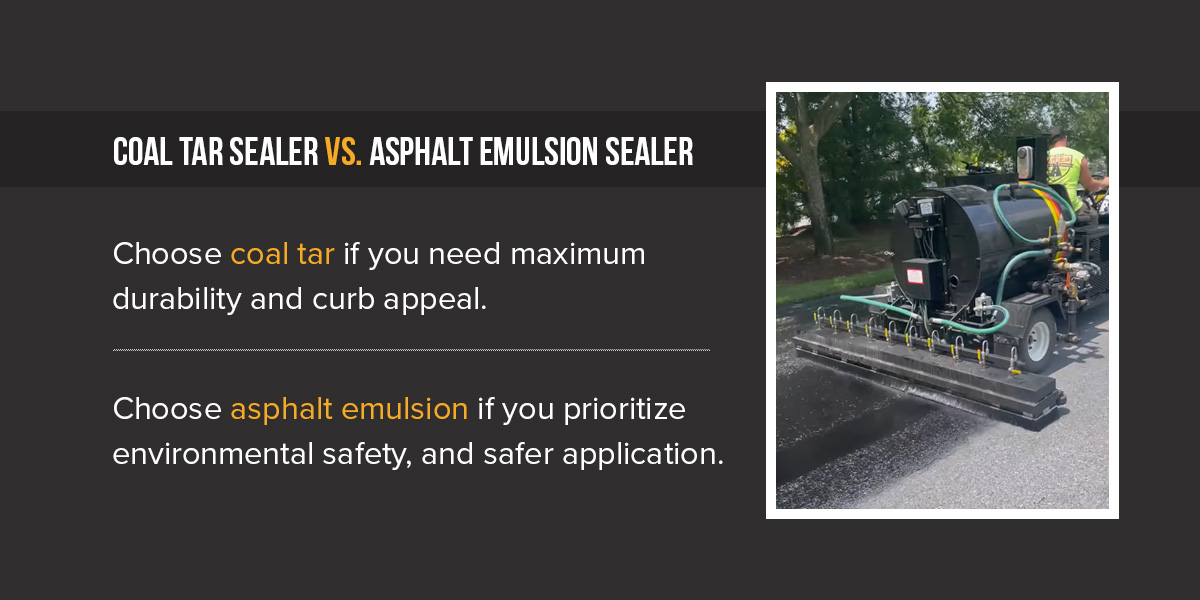
The chemical structure of coal tar includes stable and strong aromatic hydrocarbons and compounds with a high molecular weight. This structure makes it harder for weather, high traffic and caustic substances like gasoline to break the molecules’ bonds, making coal tar sealer a durable, long-lasting option.
Due to asphalt emulsion’s different molecular weight distribution and less complex, lower concentration of aromatic hydrocarbons, it can be vulnerable to wear from gasoline, high traffic and harsh weather. However, with proper maintenance and application, an asphalt emulsion will perform well.
When looking at color, texture and curb appeal, you’ll find that both coal tar sealers and asphalt emulsion sealers make the surface a nice, dark black color for sealcoating your school or bank parking lot. While the final color can vary slightly between the two sealers, both materials provide an attractive finished appearance.
Asphalt emulsion has an advantage over coal tar when it comes to public opinion regarding environmental impact. The component that makes coal tar so strong and durable, polycyclic aromatic hydrocarbons (PAHs), is made of organic compounds that give off an initial odor that some argue is bad for our health. It is important to note that opinions vary widely when it comes to this topic, especially for municipal applications.
Call Us for Sealcoating Materials
Each sealer requires the same three steps:
In terms of maintenance needs, asphalt emulsion will need more regular resealing, generally every two to four years. Coal tar can be resealed every three to five years, so you’ll need to consider the frequency of resealing when making a decision for sealcoating your office parking lot.
Each sealer has limitations that you should consider before making your choice:
Asphalt emulsions do not last quite as long as coal tar in high-traffic areas such as churches or sealcoating residential HOA communities.
Some companies consider coal tar more difficult to apply, since the applicator needs to wear more protective equipment during application. You’ll want to choose a company that uses high-quality coal tar products and follows proper application procedures. Both coal tar and asphalt emulsion products can be excellent options, but their effectiveness depends on proper manufacturing, mixing, and application.
There is much to consider when choosing the right sealant for your commercial asphalt area. However, you don’t have to do it alone. At Daniel B. Krieg, we offer expert consultation and help selecting the right sealer for your needs.
Contact us today for a consultation for personalized recommendations and award-winning service.