Central PA’s freeze-thaw cycles demand precision when it comes to pavement maintenance services. In our region, temperatures swing from sub-freezing winter conditions to intense summer heat – and that constant expansion and contraction places ongoing stress on asphalt surfaces. Over time, that stress widens cracks, weakens the base, and accelerates pavement deterioration.
Click For A Free Quote TodayMany property managers fail to know the right temperature windows for sealcoating and crack filling. Applying sealcoat too early, filling cracks during peak heat, or striping before the surface is fully dry, are all missteps that can waste your maintenance dollars.
This seasonal guide outlines when to schedule commercial pavement services in Central PA so materials cure properly, protection lasts longer, and emergency repairs are avoided. By aligning maintenance with regional weather patterns, you extend pavement life, stabilize long-term costs, and protect one of your property’s most valuable assets.
For commercial properties in Central PA, the optimal window for asphalt sealcoating runs from May through September. Sealcoating protects asphalt pavement from oxidation, fuel damage, UV exposure, moisture intrusion, everyday traffic wear, and early aging. Without routine sealcoating, asphalt dries out, becomes brittle, and begins cracking prematurely. Over the lifespan of a parking lot or roadway, neglecting this protective layer can lead to total maintenance costs reaching two to three times the original installation investment.
Sealcoating requires specific conditions to cure properly and provide the protection your pavement needs. For proper curing and adhesion:
If temperatures drop overnight and the material freezes before fully curing, the sealcoat can flake, peel, or fail within months. In Central PA’s climate, consistent curing conditions are most reliable from late spring through early fall.
Daylight length also plays a role. As fall progresses, shorter days reduce curing time and increase the risk of incomplete bonding. This is another reason early planning is essential.
Daniel B. Krieg suggests sealcoating commercial pavement every 4 to 5 years. The timing depends on:
High-traffic properties such as retail centers, medical facilities, and industrial sites may require shorter intervals to maintain optimal protection.
Sealcoating is not simply about improving appearance. It is a long-term asset management strategy designed to preserve structural integrity and delay costly reconstruction. Explore our seal coating services to help protect asphalt surfaces from moisture, oxidation, and everyday wear.
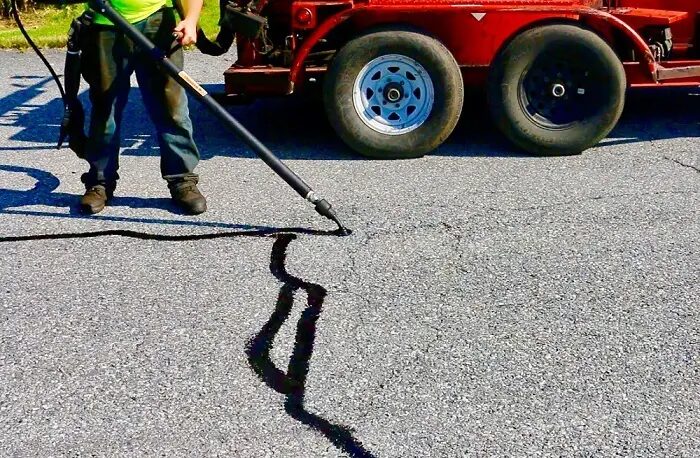
Crack filling delivers the best results during cooler weather in the Spring and Fall, and the science behind this timing is straightforward. When temperatures drop, asphalt contracts. This contraction opens cracks to their widest point, allowing crack filler to penetrate deeply into the void. As temperatures rise in summer, the asphalt expands and the filler compresses, creating a tight seal that prevents water infiltration.
Summer may seem like convenient timing, but it’s actually less effective for crack filling. During the peak of July and August heat, asphalt naturally expands and cracks narrow. Filling them during this period means less material enters the void. When winter returns and the pavement contracts again, those shallow-filled cracks reopen, allowing water to seep into the base layer.
For Central PA properties exposed to repeated freeze-thaw cycles, that seasonal expansion and contraction is constant. Aligning crack filling with the right temperature window significantly improves performance and lifespan.
Unlike sealcoating, which follows a multi-year cycle, crack filling should be evaluated annually.
Daniel B. Krieg recommends inspecting commercial pavement for cracks once per year, ideally during early spring or early fall. Frequency depends on:
High-traffic zones, loading docks, turning lanes, and sections near drainage structures often require more frequent attention.
Proactive crack filling slows oxidation, reduces water infiltration, and stabilizes the pavement structure. This ultimately delays the need for more invasive repairs such as milling and overlay or full reconstruction. When coordinated properly within your broader seasonal maintenance plan, crack filling becomes the most cost-effective tool for extending pavement life in Central Pennsylvania’s climate.
Learn about our crack-filling services designed to prevent water intrusion and reduce long-term repair costs.
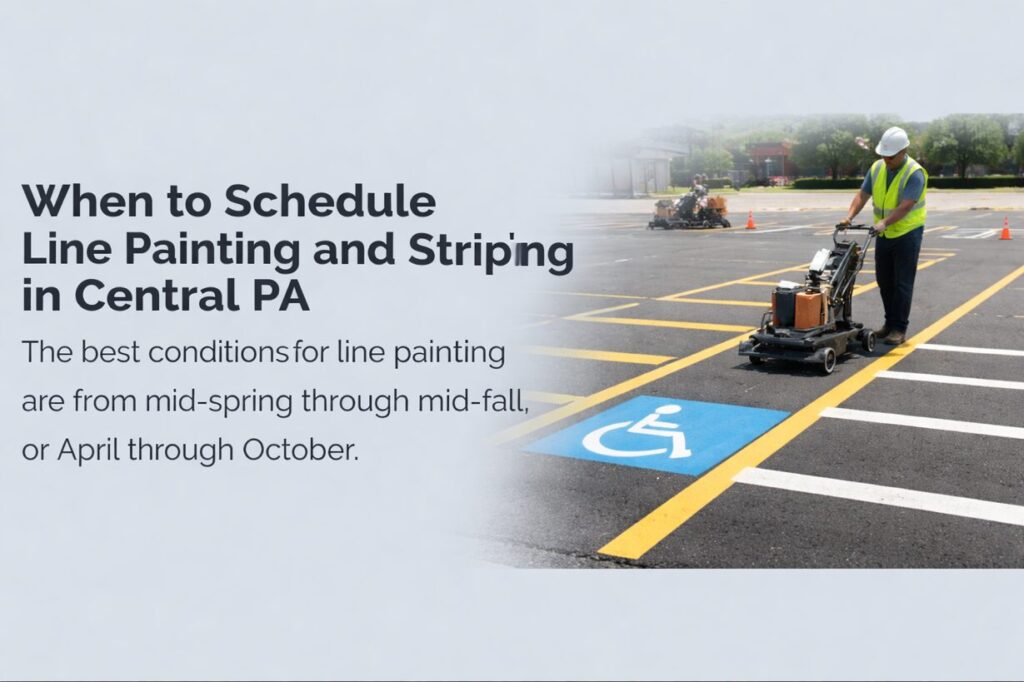
For commercial properties in Central PA, the optimal window for line painting and striping runs from April through October, when temperatures and surface conditions allow proper adhesion and curing.
Line painting requires one nonnegotiable — dry pavement. Moisture prevents paint from adhering properly, leading to premature fading and peeling. Beyond dry conditions, temperatures must remain above 40° Fahrenheit for water-based paints to dry quickly and bond correctly to the asphalt surface.
Line painting plays a key role in compliance and safety, not just in looks. Winter plowing can wear away the paint, especially in handicap parking spaces where ADA-compliant blue markings are required. Spring is the best time to check your lot for any damaged or faded striping that might lead to liability issues or code violations.
Annual line painting ensures clear traffic flow, properly designates parking spaces and maintains a professional appearance that reflects well on your business. For high-traffic commercial properties, touch-ups or full repainting every year keeps your lot safe, compliant and visually appealing.
Many property managers coordinate line painting with sealcoating during the summer months, creating a fresh, uniform appearance across the entire parking lot. However, a spring refresh in April or May offers advantages for retail properties, hotels and restaurants that want crisp, professional striping before their busy season. Effective seasonal parking lot planning ensures every service is performed when conditions deliver the best results.Explore our line painting services for clear, durable markings that improve safety and organization.
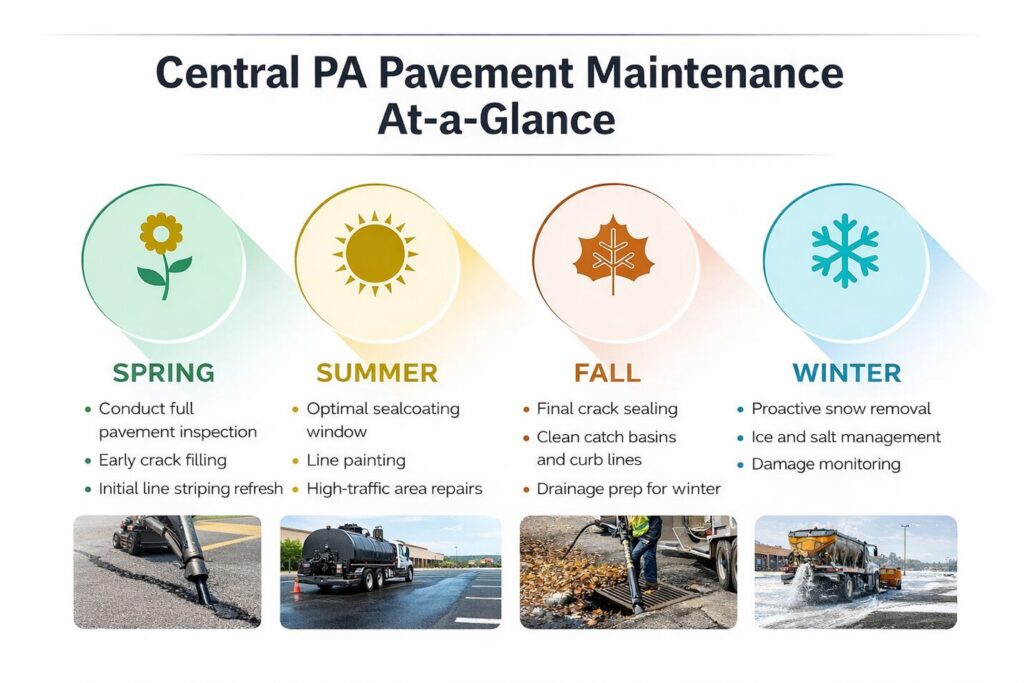
Sealcoating, crack filling and line painting have specific seasons when they can be done. However, general pavement maintenance requires ongoing attention year-round.
Late fall represents the last reliable opportunity to complete preventative work before winter conditions set in. As temperatures begin to drop, property owners should focus on:
Standing water that freezes in clogged drains accelerates pavement deterioration and creates safety hazards.
During winter months, the goal shifts from preventative application to active protection. Prompt snow removal is critical. Snow that melts and refreezes repeatedly forces water deeper into cracks and joints. Each freeze-thaw cycle expands trapped moisture, gradually turning hairline cracks into major separations. Timely plowing reduces this exposure and limits structural stress.
Ice control strategy also matters. Choosing pavement-safe ice melt is important for pavement longevity. Daniel B. Krieg carries TruMelt from AgSalt Processing, which is pet-safe, plant-safe, paver-safe and concrete-safe. Avoid applying excessive salt directly to recently sealed asphalt when possible, as harsh deicing chemicals can break down protective sealcoat layers more quickly.
Winter is not when maintenance stops. It is when disciplined response protects the work already completed.
Once the snow melts, conduct an immediate pavement inspection. Winter conditions often reveal new damage that wasn’t visible during the fall. Look for:
Identifying these issues in early spring allows you to schedule pavement maintenance services before your busy season begins. It also prevents small problems from becoming expensive structural failures by summer’s end.
Explore our pavement maintenance services to extend pavement life and reduce long-term repair costs.
Following this Central PA seasonal calendar aligns your pavement maintenance services with the weather conditions that allow materials to cure properly and deliver lasting protection. Proactive planning based on these seasonal guidelines saves money, extends pavement life and maintains the professional appearance your property deserves.
Daniel B. Krieg has served Central PA commercial properties for over 90 years. Our team understands the regional climate challenges that affect pavement performance and knows exactly when conditions are right for sealcoating, crack filling and line painting. Whether you need service in the spring, summer, fall or winter, we’re ready to help you protect your pavement investment.
Contact us today to secure your spot on our seasonal maintenance schedule and start planning for lasting pavement performance.